Industrial water treatment systems face unprecedented performance demands in the year 2026. Global regulatory bodies have tightened standards for zero liquid discharge and industrial wastewater recycling across all major manufacturing sectors. Consequently, desalination plants, chemical facilities, and power generation stations must push their filtration systems to maximum operational capacity. Spiral-wound membrane elements serve as the primary defensive line against dissolved solids and hazardous contaminants in these systems. However, high-recovery operations expose internal structural components to extreme physical stresses and thermal loads. Engineering teams now recognize that catastrophic membrane failure often originates from the structural spine rather than the membrane sheath itself. Specifically, the central permeate tube must withstand immense mechanical loads, intense pressure differentials, and continuous chemical exposure. To address these vulnerabilities, engineering procurement teams increasingly partner with China Leading PSU Core Tube Suppliers to source high-performance structural components. These advanced polymer components ensure safe fluid transfer under high-flux conditions without risk of mechanical collapse. The entire mechanical efficiency of a modern reverse osmosis system depends directly on the durability of its core tube. Therefore, selecting the right polymer material has shifted from a routine purchasing decision to a critical engineering priority. Industry professionals must carefully evaluate the lifecycle costs of these essential components to prevent unexpected system shutdowns and expensive plant downtime. Similarly, hygienic food and dairy processing lines are placing comparable structural demands on membrane system components.
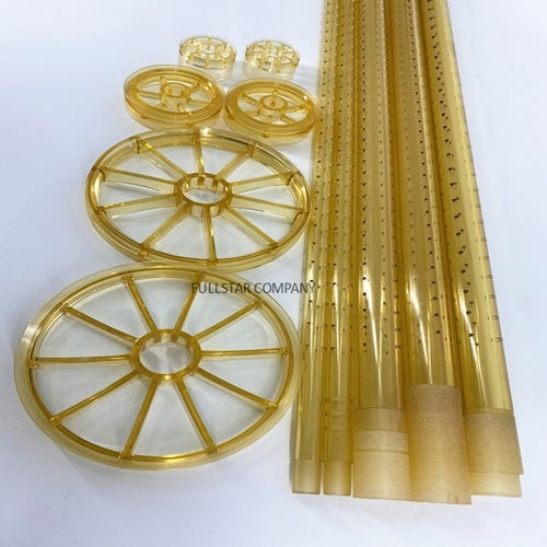
Modern industrial desalination plants frequently operate at exceptionally high hydraulic pressures to achieve high recovery rates. Industrial filtration processes, particularly in seawater purification, mining water treatment, and wastewater reclamation, require continuous pressures exceeding 70 to 80 bar. Under these extreme conditions, the internal components experience severe mechanical load from opposing fluid directions. Standard engineering plastics often suffer from a phenomenon known as hydrostatic creep under long-term exposure. This material fatigue causes gradual dimensional deformation, stretching, or flattening over extended operating periods. Even a tiny change in the outer diameter can compromise the critical O-ring seals of a membrane element. Consequently, raw water bypasses the membrane layer and pollutes the purified permeate stream immediately. High-molecular-weight polysulfone polymer provides an exceptional solution to this structural vulnerability. The robust molecular structure of polysulfone maintains rigid stability under continuous mechanical load and elevated temperatures. Therefore, polysulfone core tubes successfully eliminate the risk of physical creep in standard 8040 and 4040 membrane configurations. By maintaining strict dimensional tolerances, these tubes prevent internal leakage during long-term operations. System integrators benefit from prolonged membrane lifespans and reduced maintenance intervals. Ultimately, structural reliability under extreme pressure ensures predictable flow rates and reliable water quality across large-scale industrial installations.
Membrane fouling presents a persistent obstacle to reverse osmosis operational efficiency and membrane flux longevity. Over time, organic matter, biological scale, and mineral deposits accumulate on the dense membrane surface. To restore optimal flux and pressure balance, system operators must perform aggressive Clean-in-Place cycles regularly. These maintenance cycles utilize highly reactive chemical solutions to dissolve stubborn foulants and restore performance. Specifically, operators flush the pressure vessels with strong mineral acids at a pH less than 2 to remove inorganic scale. They also apply caustic alkaline solutions at a pH greater than 12 to eliminate organic biofilms and stubborn particulates. These harsh chemicals rapidly degrade inferior plastic components over time. When exposed to repeated chemical stress, low-grade polymers develop micro-cracks and suffer from irreversible hydrolytic degradation. This structural failure permits hazardous substances or plastic particulates to leach into the purified fluid pathway. High-purity polysulfone excels in these demanding environments due to its superior chemical resistance. The polymer chain withstands aggressive chemical environments without breaking down or losing mechanical strength. As a result, premium polysulfone permeate tubes ensure non-leaching, safe fluid transfer over hundreds of chemical cleaning cycles. This chemical resilience protects downstream processes from contamination and maintains strict process purity.
Beyond conventional industrial water treatment, membrane filtration has become an indispensable technology in modern dairy and food processing. Ultrafiltration (UF) and nanofiltration (NF) systems are now widely used to concentrate milk proteins, separate whey components, standardize lactose content, and reclaim process water from dairy wastewater streams. These applications place unique demands on the structural core tube, since dairy production lines require frequent, high-intensity Clean-in-Place cycles using both acidic and caustic sanitizing agents to meet strict food-safety standards. High-purity polysulfone offers a distinct advantage in this environment. Its resistance to hydrolytic degradation allows core tubes to withstand hundreds of daily sanitation cycles without embrittlement or leaching, helping processors maintain compliance with food-contact material regulations. The smooth, low-fouling surface of PSU components also reduces protein and fat adhesion, limiting bacterial growth points and extending the interval between deep-cleaning cycles. In addition, the dimensional stability of polysulfone under repeated pressure cycling—common in UF systems processing viscous dairy streams—prevents seal degradation and cross-contamination between the permeate and retentate sides. As dairy producers scale up protein-concentration and whey-valorization operations to meet growing global demand, PSU core tubes are increasingly specified not only for their mechanical strength, but for their proven reliability in hygienic, food-grade filtration environments.
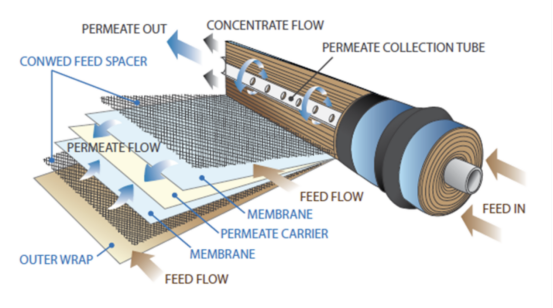
System efficiency depends heavily on the optimization of internal fluid dynamics and the reduction of parasitic energy losses. As clean water passes through the membrane layers, the fluid enters the central core tube through a series of tiny perforations. Local turbulence frequently occurs at these entry points, creating significant hydraulic friction and localized backpressure. This resistance creates a localized pressure drop inside the core of the membrane element. Consequently, the high-pressure pump must expend more electrical energy to overcome the internal drag. To combat this energy loss, advanced manufacturers implement computerized perforation strategies. Engineers utilize precise slotting configurations and specialized hole spacing across the tube surface. They also apply edge chamfering to eliminate sharp corners that cause fluid resistance. Utilizing customized polysulfone core tubes with high precision allows system designers to minimize internal turbulence. This hydrodynamic optimization directly reduces overall system energy consumption. Furthermore, proper perforation geometry ensures a balanced flux distribution across the entire length of the membrane. When the fluid flows smoothly, the system operates at lower net driving pressures. Therefore, precise engineering of the core tube geometry translates directly into lower monthly utility bills for industrial water treatment facilities.
Achieving excellence in polymer extrusion and injection molding requires specialized manufacturing capabilities and advanced facility infrastructure. Global original equipment manufacturers require consistent component reliability to protect their international reputations and project warranties. In this competitive landscape, Fullstar stands out as a highly capable manufacturing partner for global engineering enterprises. The enterprise possesses extensive experience in producing high-precision plastic components for industrial applications. By operating advanced injection molding lines, Xiamen Fullstar Imp.&Exp.Trading Co.,Ltd. ensures that every product satisfies strict international engineering standards. The manufacturer maintains zero-defect quality control protocols throughout the entire production lifecycle.
Specifically, Fullstar (Xiamen Fullstar Imp.&Exp.Trading Co.,Ltd.) offers a comprehensive portfolio of specialized polysulfone core tubes. Their product line includes standard 8040 and 4040 configurations optimized for diverse industrial applications. These durable components perform exceptionally well in standard municipal water treatment facilities. In addition to municipal and oilfield-grade tubes, the manufacturer also supports food-grade PSU core tube specifications tailored for dairy and beverage filtration systems. Moreover, the manufacturer develops specialized variations designed for highly challenging oil and gas extraction environments. These demanding oilfield applications require extreme durability due to the presence of hydrocarbons and high operating temperatures.
The company utilizes premium virgin resins to guarantee chemical purity and structural integrity. Furthermore, their technical team provides customized slotting and perforation patterns tailored to unique OEM engineering designs. This specialized service allows system integrators to achieve optimal fluid dynamics for proprietary filtration systems. By combining material science with precision manufacturing, the enterprise helps global clients maximize their operational uptime. Through these targeted engineering solutions, the company remains a premier choice for high-end fluid management infrastructure worldwide. Discover more about these high-precision fluid components and view the full technical specifications on the official corporate website: https://www.fullstarxm.com/.
XIAMEN FULLSTAR IMP.& EXP. TRADING CO.,LTD.


 IPv6 network supported
 Scan to wechat :

 fullstar@xmfullstar.com
 en
en ru
ru es
es