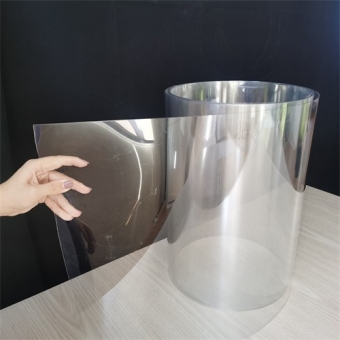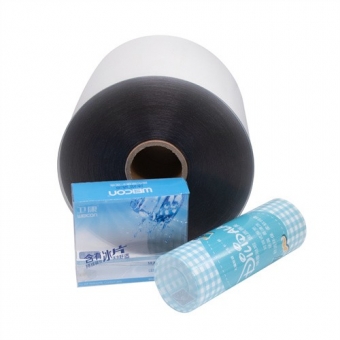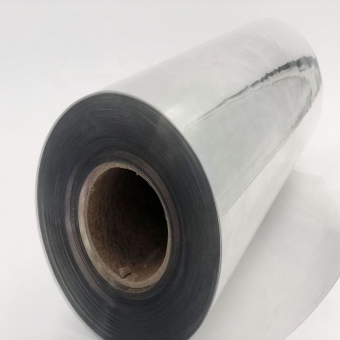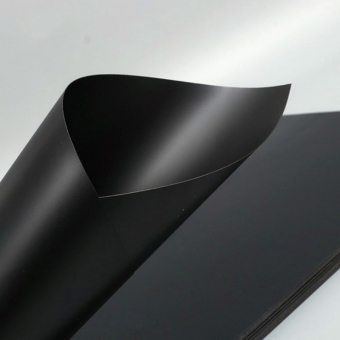
Cold chain logistics serve as the backbone of modern fresh food distribution, preserving the quality of delicate produce, meats, and prepared meals from farm to table. However, temperature fluctuations during transport, storage, and display often trigger a physical phenomenon known as the dew point. When warm, humid air inside a packaged container meets a cold shelf environment, water vapor rapidly condenses on the plastic lid. This process creates a dense layer of micro-droplets that completely blocks consumer visibility. Consequently, supermarket retailers face a silent display crisis where fresh food looks unappealing, directly reducing sales and increasing food waste. To solve this critical retail challenge, Professional Anti-fog APET Packaging Factories are deploying advanced material science to design transparent Amorophous Polyethylene Terephthalate (APET) packaging that remains crystal clear under extreme conditions.
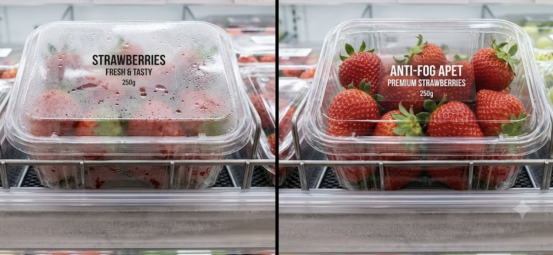
Q1: Why does cold-chain condensation do more than just impair product visibility on supermarket shelves?
For supermarket retailers, product presentation dictates consumer purchasing decisions. When fresh strawberries, prepared salads, or premium cuts of beef remain hidden behind a fogged plastic barrier, customers quickly lose trust in the freshness of the item. However, the negative impact of cold-chain condensation extends far beyond simple aesthetics.
From a thermodynamic perspective, untreated APET surfaces are naturally hydrophobic. When moisture accumulates on these surfaces, water molecules bead up into high-contact-angle droplets, typically exceeding 60 degrees. These microscopic spheres scatter light in multiple directions, which creates the opaque, white appearance commonly referred to as fog.
Over time, these heavy water droplets grow too large and drip back down directly onto the food. For fresh-cut fruits and vegetables, this pooling of liquid water accelerates cellular breakdown and encourages rapid mold growth. For meats and seafood, dripping moisture degrades texture and creates a breeding ground for spoilage bacteria. Consequently, a seemingly harmless mist on a plastic container lid can shorten product shelf life by several days. In a high-volume retail environment, this degradation translates into higher discard rates, lower profit margins, and increased supply chain costs.
Q2: How do professional manufacturers physically modify APET sheets to maintain a persistent, non-fogging surface in high-humidity environments?
To prevent light scattering and moisture dripping, professional manufacturing plants must permanently alter the surface chemistry of the APET sheet. The ultimate goal is to transform the surface of the polymer from hydrophobic to highly hydrophilic. By reducing the water contact angle to less than 10 degrees, the material forces water droplets to flatten out instantly. Instead of forming light-scattering beads, the moisture spreads into an ultra-thin, continuous, and completely transparent film of water.
To achieve this persistent anti-fog effect, advanced manufacturers utilize two primary techniques: topical wet coating and internal co-extrusion masterbatch blending.
Topical wet coating involves applying a specialized food-grade surfactant directly to the surface of the extruded sheet. This method provides immediate, highly efficient anti-fog performance at a lower production cost. However, standard topical coatings can wash away over time or wear off under physical friction during vacuum forming.
To overcome this durability issue, premium manufacturers utilize internal masterbatch co-extrusion. In this process, technicians blend anti-fog agents directly into the raw resin during the molten extrusion stage. As the sheet cools, these active surfactant molecules slowly migrate to the surface, creating a self-replenishing protective barrier that resists washing, scraping, and thermal processing.
Producing such stable polymers requires incredibly reliable raw materials. To ensure this high level of consistency, Xiamen Fullstar Imp.&Exp.Trading Co.,Ltd. maintains deep, long-term partnerships with global material giants such as Far Eastern Group and Nan Ya Plastics. By sourcing exceptionally pure virgin APET resins, the factory can guarantee predictable surfactant migration kinetics, ensuring that the resulting packaging retains its anti-fog properties even during prolonged cold storage.
Q3: What quality control parameters determine if an anti-fog APET sheet can survive long-term cold storage and rapid logistics transitions?
Not all anti-fog materials perform equally under real-world logistics stress. Fresh food packaging must withstand rigorous physical demands, including high-speed thermoforming, rapid cooling, and vibrational friction during transport. Therefore, manufacturers must monitor several technical parameters to ensure structural and chemical durability.
First, technicians must carefully measure surface tension, which professionals express in mN/m or Dyne levels. An effective anti-fog APET sheet typically requires a surface tension above 38 mN/m to ensure that water flattens out smoothly. If the Dyne level drops during thermal stretching or storage, the anti-fog mechanism will fail, causing droplets to reform.
Second, the structural thickness of the sheet must remain uniform. Even a minor variation in gauge can lead to uneven heating during thermoforming, which weakens the anti-fog coating in stretched areas. To prevent these defects, Fullstar operates advanced multi-layer extrusion lines equipped with automatic thickness control systems. These systems maintain tight tolerances across different thicknesses, whether producing thin films or robust 0.5mm clear sheets.
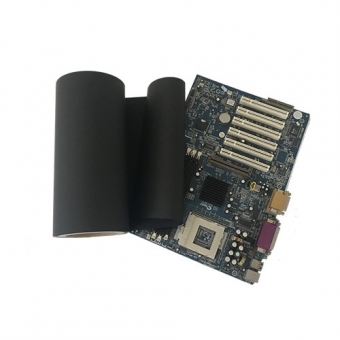
Third, the material must resist cracking and clouding at low temperatures. Under cold-chain conditions, standard plastics can become brittle. However, premium APET sheets retain their impact resistance even when chilled, protecting the food from physical damage. To ensure that every batch meets these demanding conditions, the company maintains over 10 sets of material testing systems, running continuous quality checks under simulated cleanroom and cold-chain environments. Furthermore, the factory can integrate other advanced properties into their material lines, offering specialized solutions like rigid anti-static APET sheets for hybrid retail-electronics packaging needs.
Q4: How should global procurement officers evaluate an APET factory to ensure both high-performance packaging and supply chain security?
For global purchasing managers, selecting a packaging supplier involves evaluating both technical capability and logistical reliability. A supplier must offer more than just a functional material; they must guarantee a stable, certified supply chain that can adapt to sudden market shifts.
First, procurement officers must verify international cleanroom and safety certifications. Because cold-chain packaging directly contacts fresh food, manufacturers must hold rigorous credentials, including ISO 9001, BBRC, RoHS, and REACH. These certifications prove that the anti-fog chemicals used are completely safe, non-toxic, and free from heavy metals or hazardous migration.
Second, production capacity and delivery speed are critical. High-volume supermarket suppliers operate on tight timelines and cannot afford packaging shortages. To meet these demands, Fullstar(Xiamen Fullstar Imp.&Exp.Trading Co.,Ltd.) runs 4 dedicated production lines for PP/HIPS sheets and 4 for PET sheets, achieving a combined monthly capacity of 2000 tons. This massive output allows the factory to dispatch standard orders in just 6 to 8 days, minimizing inventory holding costs for global buyers.
Finally, geographic supply chain resilience has become a major consideration in international trade. To insulate global clients from geopolitical tariffs and shipping disruptions, the enterprise established a modern overseas manufacturing facility in Malaysia in 2026. This expansion provides a highly stable, tariff-friendly export channel directly to European and American markets. By combining diverse manufacturing locations with comprehensive testing and custom design capabilities, professional manufacturers provide global retailers with a reliable shield against cold-chain disruption.
Conclusion: Securing Shelf Dominance with Advanced Material Science
In the highly competitive supermarket retail sector, cold-chain packaging is no longer just a container; it is a critical tool for preserving freshness and driving sales. By transitioning from standard plastics to high-performance, anti-fog APET sheets, retailers can eliminate condensation issues, extend product shelf life, and present fresh food in the best possible light. As a seasoned industrial leader with over 20 years of experience, Fullstar continues to deliver the material innovations and supply chain stability required to meet these exacting global standards. To explore customized anti-fog packaging solutions for your retail operations, visit the official website at https://www.fullstarxm.com/.
XIAMEN FULLSTAR IMP.& EXP. TRADING CO.,LTD.


 IPv6 network supported
 Scan to wechat :

 fullstar@xmfullstar.com
 en
en ru
ru es
es